
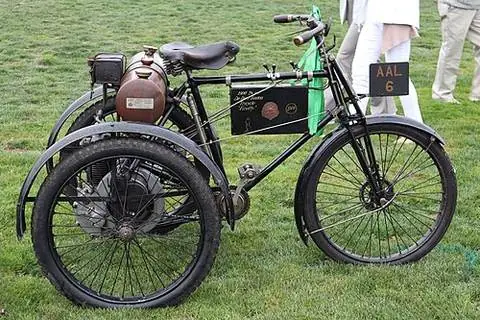

Engined motor tricycles and singles
Library entry covers 1896-1910
Source
No published schedule found yet
These are general intervals for this bike's era and layout, so check them against your workshop manual.
54 items for a 1896 model, grouped by interval the way a factory chart is laid out.
How this bike is built (what the schedule is based on)
- Engine cycle
- Four-stroke
- Engine lubrication
- Total-loss (hand pump / drip feed / mechanical pump to waste)
- Oil filtration
- None (no filter)
- Valve gear
- Atmospheric inlet valve (suction-opened)
- Ignition
- Trembler coil / battery and timer (veteran)
- Charging
- None (magneto only / no battery charging)
- Battery
- Wet cell (flooded lead-acid, needs topping up)
- Fuel system
- Single carburetor
- Cooling
- Air / oil cooled
- Primary drive
- None (direct belt drive, veteran)
- Gearbox oil
- No gearbox (single speed / hub gear)
- Clutch control
- None (direct drive / belt slip, veteran)
- Final drive
- Leather or rubber V-belt (veteran)
- Front suspension
- Girder fork
- Rear suspension
- Rigid (hardtail)
- Front brake
- Drum (or band / stirrup)
- Rear brake
- Drum (or band / belt rim)
- Wheels
- Spoked, tubed
- Sidecar
- No sidecar
1896 De Dion-Bouton Engined motor tricycles and singles
On the road: every 50 mi
1 item-
Top up total-loss oil tank, check drip feed / pump ratePre-ride / on the roadGuideline
Total-loss engines burn their oil by design. Check the sight glass or drip rate and give hand-pump charges as the manual and conditions require.
On the road: every 100 mi
1 item-
Check drive belt tension and belt fastenerPre-ride / on the roadGuideline
Leather and early rubber belts stretch and slip when wet. Carry a spare fastener and a belt punch.
On the road: every 300 mi
2 items-
Acetylene / oil lamps: check carbide, water and wicksPre-ride / on the roadGuideline
-
Check tire pressuresPre-ride / on the roadGuideline
On the road: every 500 mi
2 items-
Grease girder / springer fork linksPre-ride / on the roadGuideline
Grease gun on every nipple until clean grease shows. Touring days add up fast.
-
Walk-around: check nuts and bolts for vibration looseningPre-ride / on the roadGuideline
Old machines shake things loose: exhaust nuts, mudguard stays, footrests, tank mounts, battery strap.
On the road: every 1,000 mi
1 item-
Check road kit: plugs, points file, master link, tube patches, wire, tapePre-ride / on the roadGuideline
Every 300 mi
1 item-
Oil exposed inlet rocker gear and pushrod endsEngineGuideline
Exposed valve gear on F-heads ran with a few drops of oil or grease cup attention.
Every 500 mi or 6 months
3 items-
Clean early carburetor / mixing valve, check floatFuel and airGuideline
-
Clean and adjust trembler coil contacts / timerIgnition and electricsGuideline
-
Lubricate pedal / starting gear and bottom bracketControls and cablesGuideline
Every 500 mi
2 items-
Drain residual oil from crankcase (total-loss)EngineGuideline
Many total-loss engines collect oil in the crankcase. Drain per the manual, then prime with fresh oil before riding.
-
Dress / clean V-belt and pulley rimsFinal driveGuideline
Every 1,000 mi or 6 months
7 items-
Inspect, clean and gap spark plugsEngineGuideline
-
Lubricate manual advance / retard control and cableIgnition and electricsGuideline
-
Adjust front drum brakeBrakesGuideline
-
Adjust rear drum brake and rod / cable linkageBrakesGuideline
-
Check spoke tension and wheel trueWheels and tiresGuideline
-
Inspect tire tread, sidewalls and date codesWheels and tiresGuideline
-
Lubricate control cables and lever pivotsControls and cablesGuideline
Every 1,000 mi or 12 months
1 item-
Grease saddle pivot, check saddle springs / seat postRear suspension and frameGuideline
Every 1,500 mi or 6 months
1 item-
Clean / inspect air filterFuel and airGuideline
Mesh or oiled foam: clean and re-oil. Paper: blow out or replace. Some very early machines have no filter at all.
Every 1,500 mi or 12 months
1 item-
Check and adjust valve clearancesEngineGuideline
Every 2,000 mi or 12 months
2 items-
Inspect hand pump, check valves and drip-feed sight glassEngineGuideline
-
Check girder fork spindle play, adjust friction / hydraulic damperFront endGuideline
Every 3,000 mi or 12 months
9 items-
Check engine mounting bolts and platesEngineGuideline
-
Check throttle cable(s) free play and returnFuel and airGuideline
-
Clean fuel tap filter / sediment bowlFuel and airGuideline
-
Check / set ignition timingIgnition and electricsGuideline
-
Check steering damper (friction or hydraulic)Front endGuideline
-
Check steering head bearing adjustmentFront endGuideline
-
Check footrests, pegs, rear brake and gear lever pivotsRear suspension and frameGuideline
-
Grease and check center / side stand and springsRear suspension and frameGuideline
-
Check wheel bearings for playWheels and tiresGuideline
Every 4,000 mi or 12 months
2 items-
Replace spark plugsEngineGuideline
-
Lubricate brake cam spindles, check linings and drumsBrakesGuideline
Every 4,000 mi or 2 years
1 item-
Decarbonize head, grind / lap valves (top-end decoke)EngineGuideline
Period practice. Leaded-era valve seats may need hardened seats for unleaded fuel.
Every 5,000 mi or 2 years
1 item-
Check cylinder head bolt torqueEngineGuideline
Air-cooled iron and alloy engines can lose head bolt tension; follow your manual's sequence and whether it is done hot or cold.
Every 6,000 mi or 12 months
3 items-
Clean carburetor float bowl(s), check float level and jetsFuel and airGuideline
Ethanol fuel varnishes old carbs quickly in storage.
-
Inspect girder fork links, springs and spindles for wear or cracksFront endGuideline
-
Lubricate speedometer / tachometer cables, check driveControls and cablesGuideline
A dry speedo cable whips the needle and eventually kills the instrument.
Every 6,000 mi or 2 years
2 items-
Check engine breather and oil returnEngineGuideline
-
Repack / replace wheel bearingsWheels and tiresGuideline
Cup-and-cone and taper roller hubs need periodic repacking and adjustment.
Every 10,000 mi or 2 years
1 item-
Compression test (or leak-down)EngineGuideline
Every 10,000 mi or 3 years
1 item-
Repack / replace steering head bearingsFront endGuideline
Many old machines use loose balls in cups and cones. Taper roller conversions are common.
Every 15,000 mi or 5 years
1 item-
Inspect clutch plates and springsPrimary and gearboxGuideline
Every 15,000 mi
1 item-
Replace brake linings / skim drums (wear based)BrakesGuideline
Every 12 months
1 item-
Check speedometer / odometer against a known distanceControls and cablesGuideline
Old speedos drift with tire size and drive wear. Use phone GPS over a measured 10 miles / km.
Every 2 years
3 items-
Inspect fuel tank for rust, sealer failure, leaksFuel and airGuideline
-
Inspect wiring, bullet connectors and ground pointsIgnition and electricsGuideline
-
Inspect frame, welds and lugs for cracksRear suspension and frameGuideline
Every 4 years
1 item-
Replace fuel linesFuel and airGuideline
Old rubber and modern ethanol fuel do not mix well.
Every 6 years
2 items-
Replace inner tubes and rim tape with tiresWheels and tiresGuideline
-
Replace tires on age (regardless of tread)Wheels and tiresGuideline
Guideline lines: Intervals here are general guidelines for the machine's era and layout, compiled for this app. They are not factory manual figures. Check your workshop manual, and edit any interval in the bike's Schedule tab.
Keep up with this schedule on your phone
Add the bike in the app and this chart loads itself, ready to log against and edit.